(Not) the Same Image, Times Four
The model is chosen. The light, the moment, the expression — all of it determined before the work begins. And yet the image remains undecided, because the image and the artwork are not the same thing. One is what was objectively there. The other is what the artist chose to show you and in what manner.
Consider what follows.
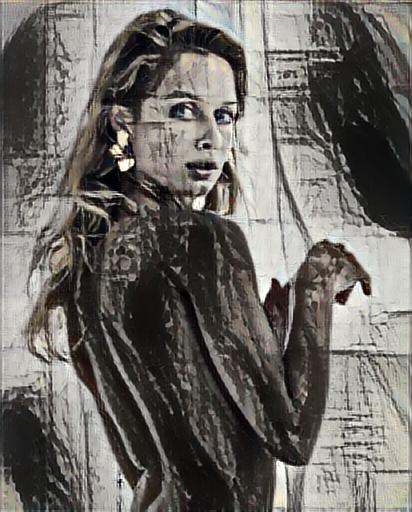
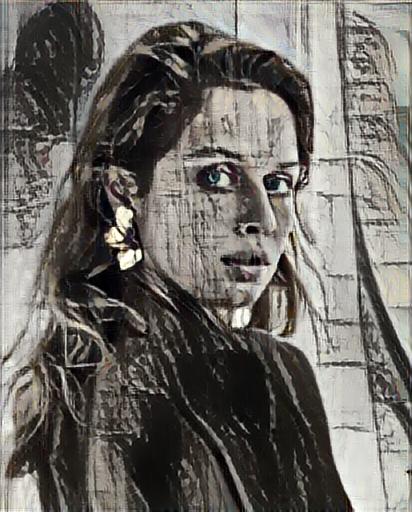
These are the same woman, from the same session, rendered in the same style. The left image is a portrait. The right image is a portrait too — except that it feels much more like a character study. The first image gives you a person in a moment. The second gives you a face coming to a decision. Widen the frame and you get context, body language, the suggestion of a story. Tighten it and all of that falls away, and what remains is more intense for the loss. The crop didn’t just change the composition. It changed the question the image is asking.
This is not a subtle distinction. It is the whole game.
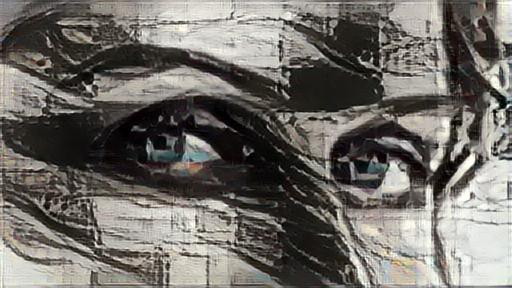
Now the portrait is gone.
There is no subject here in the conventional sense — no figure to read, no body to interpret, no room to place her in. There are only eyes, and they are enormous, and they are looking directly at you, and you cannot look away. What was a woman in a room has become something closer to a confrontation. The style that felt like texture in the portraits here becomes almost geological — the surface of something ancient, something that predates the category of portrait entirely.
Edward Weston understood this. So did Bill Brandt. The body, looked at the right way, stops being a body and becomes a landscape, a weather system, a fact of nature rather than a social one. The eyes here are not windows into anything. They are the view.
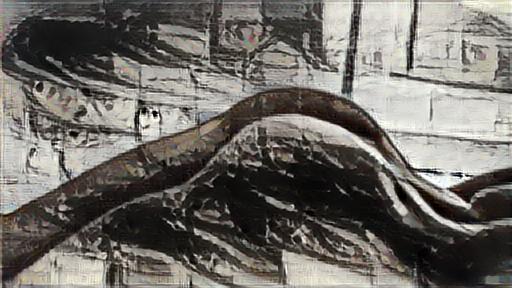
And here the figure is gone entirely.
What remains is form — curve against plane, shadow defining volume, the body rendered as terrain. A viewer encountering this image without the preceding three might call it a pure, unanchored abstract. They would not be wrong. Yet, the same style that earlier preserved a face, an expression, a pair of earrings, here dissolves all of that into something that belongs to landscape as much as to portraiture.
All these views were latent in the source. Not one artwork but four. The frame is not a window onto the subject — it is an argument about what the subject is. Move it an inch and you are making a different argument entirely.