The Eyes Decline to Watch
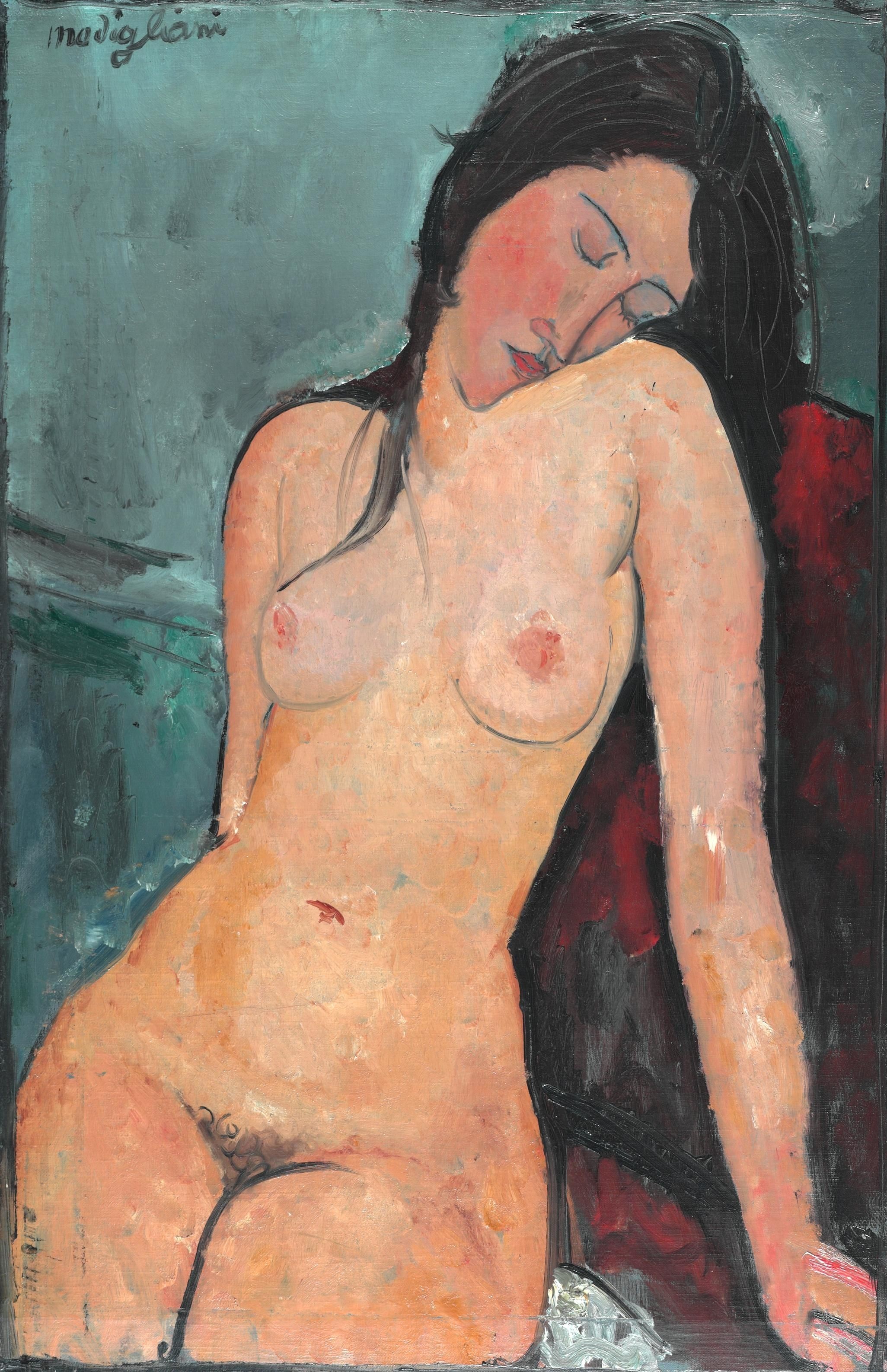
There is a transaction at the center of nearly every nude ever painted. The model offers herself to be seen; the viewer accepts. The pose, the lighting, the drape that conceals exactly as much as it reveals — all of it is negotiated in advance, and the model's eyes are where the contract is signed. She looks at you, or she looks demurely away so that you may look at her, and either way she has acknowledged your presence in the room.
In 1916, Amedeo Modigliani painted a nude that tears up the contract.
The painting hangs today in the Courtauld Gallery in London. The model was Beatrice Hastings — writer, critic, and at the time Modigliani's lover — and she sits leaning into a mass of dark red that is barely a chair, her head dropped toward her shoulder, her eyes closed. She is not asleep. Sleep is something we watch people do; it makes them more available to us, not less. Hastings is awake and elsewhere. The eyes are closed the way a door is closed. Modigliani gives us the long line of her neck, the warmth of the flesh against that cold teal ground, every sensual fact of the body — and withholds the one thing that would make it a performance. She is not being seen. She simply is.
Amedeo Modigliani, Seated Nude, 1916. Oil on canvas. The Courtauld Gallery, London. Public domain image via Wikimedia Commons.

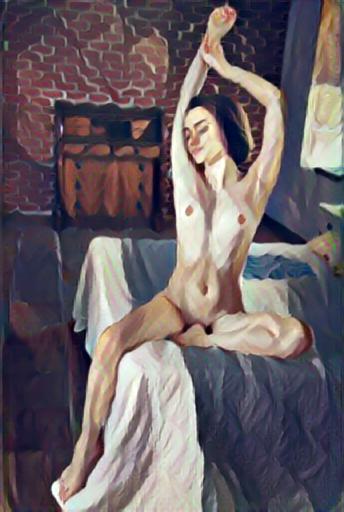
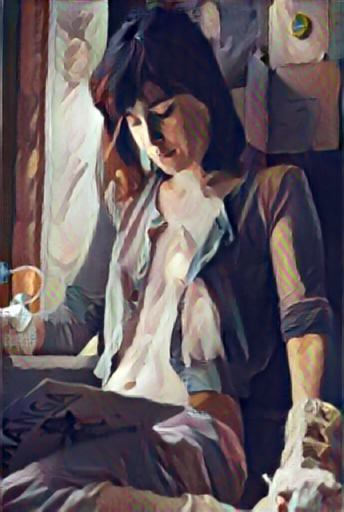
That refusal turns out to be the most radical act available to a nude, and the figures below decline the transaction four different ways. The first sits with an arm lifted over her head, a gesture as old as the odalisque — except the gesture usually comes with a gaze, an invitation to admire the stretch. Here the eyes are shut and the stretch belongs to her alone: privacy as luxury, the difference between a dancer on stage and a woman waking up. The second declines differently. Her head drops into the same melancholic curve Modigliani drew through Hastings's neck — but follow it down and you arrive at a magazine, open in her lap, her shirt half on and forgotten. Her eyes are not closed; they are spent, every bit of their attention paid out to the page. Painters have always known this figure — Rembrandt sat his Bathsheba nude with a letter and let the reading do all the work — because a woman absorbed is a woman elsewhere. We are not asked to leave. We were never noticed arriving.
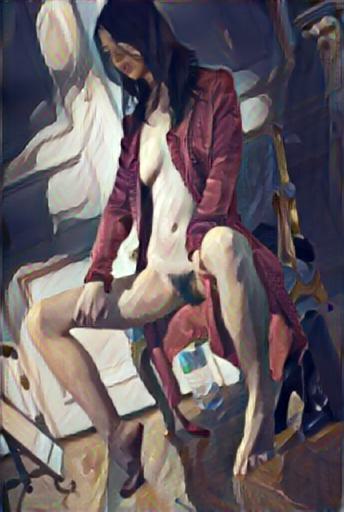
The two figures that follow complicate the argument, each from a different direction. One sits in an attic room littered with framed paintings propped against the walls and the floor — a room full of things that exist to be looked at — with her robe fallen open and her eyes closed anyway. The setting makes the withdrawal stranger and more convincing: not a studio pose held for a painter, but a pause inside a working day, the robe open because there was no one there to close it for, the pictures around her waiting for the attention she declines to give or receive. She is tired but resolute.
The other does something Modigliani never tried. Her hair has fallen across her face, and at first she seems to have gone further than any of these figures — withdrawn entirely, not even an eyelid left to read. Then you find the eye. It is open, back behind the curtain of hair, and it is on you. She has not left the room; she has taken the better position in it. The contract the others tore up, she has rewritten with the terms reversed: the viewer, who came to look, is being watched from a place he cannot see into. Every other figure here declined the transaction. This one collects on it.
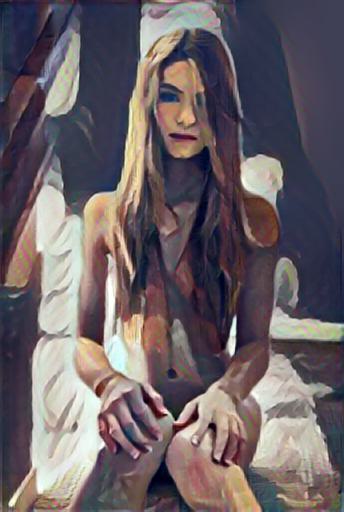
Which is, in the end, why the eyes matter so much. They are the only part of the body that looks back. Closed, or given wholly to a page, they turn the nude from a mirror held up to the viewer's appetite into what Modigliani understood a century ago it could be: a portrait of someone who is entirely, and only, herself. And open — hidden, patient, watching from behind the hair — they remind us of the other thing a nude has always known and rarely said aloud: that the person in the frame can see us too.