When He Knew Her Soul (Modigliani)
The story is told about Jeanne Hébuterne, though by now it belongs to everyone Modigliani ever painted. She asked why he had given her no eyes — just the almonds, smoothed blank, two fields of grey-blue where a gaze should be. When I know your soul, he is supposed to have said, I will paint your eyes. The line is probably too good to be entirely true. It is also the best key anyone has found to the strangest habit in modern portraiture: a painter who could catch a likeness in six lines, refusing, canvas after canvas, to let his sitters look at anything.
So the blank eye became the house style, and the house style became the mystery. A Modigliani figure is present the way a statue is present — turned toward you, composed for you, and unreachable. Whatever the sitter was thinking stayed her own. It is a courtesy, if you want to read it that way. It is also a locked door.
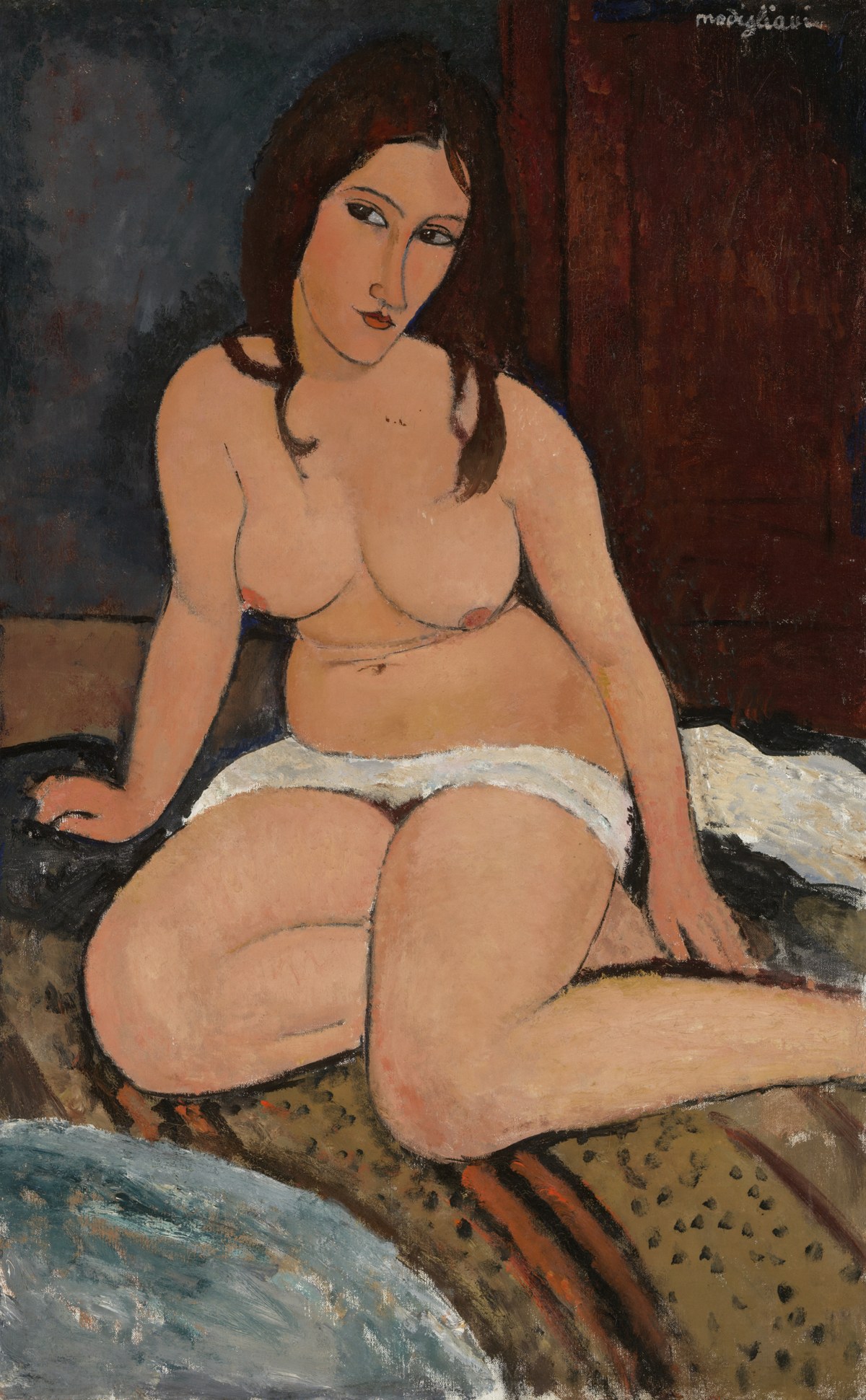
Now look at her. She is at her bath — a towel across her lap, a wash basin at her feet, one arm braced behind her — painted in 1917, the year the Paris police marched into Modigliani's only lifetime solo show and forced the nudes off the walls for indecency, though this scene is almost prim by the standards of that series. A woman at her toilette is the oldest alibi in the genre, the excuse for a thousand borrowed glances. Which makes the eyes the whole event: she is the one doing the glancing.
The composition scandalized no one. What lives is the face: the head tilted, the mouth set somewhere between patience and amusement, and the eyes — painted, pupiled, pointed sideways at something we will never see. Every rule of his practice says those eyes should be empty. They are the most awake thing in the room. A nude is the genre of the anonymous body; the model's inner life is supposed to be beside the point. He reserved the painted eye for the people whose souls he claimed to know — and then spent it here, on a woman whose name we have lost. Either he knew something, or the look demanded the exception.
Amedeo Modigliani, Seated Nude, 1917. Oil on canvas. Royal Museum of Fine Arts Antwerp (KMSKA). Public domain; image via Wikimedia Commons.
,_Koninklijk_Museum_voor_Schone_Kunsten_Antwerpen,_2060.jpg)
This essay is about that look — the returned gaze, the sitter who declines to be only seen. We published its opposite already: The Eyes Decline to Watch, an essay about figures who close their eyes, turn their backs, refuse the whole transaction. The four figures below do the other thing. All of them look back, the way she does. What differs — and it differs completely — is what the look carries.
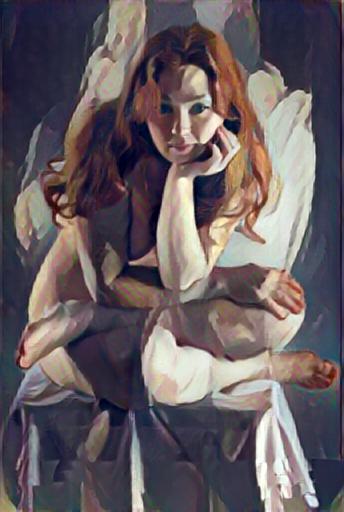
Start with the image where the model is clearly running the session. Chin on hand, weight settled, hair down because she decided it should be. Nothing about her is startled and nothing is offered; she is looking at the artist before the artist is ready. All right — what next? The nude is supposed to be the passive genre, the body arranged for viewing. She has quietly reversed the current. You do not catch a figure like this. You are granted an appointment.
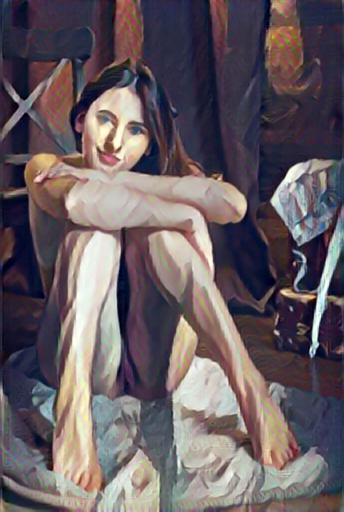
The second look is lighter and harder to hold. Arms crossed over the knees, chin resting on the crossing, and a half-smile that has not decided whether to become a whole one. This is the gaze as a game with two players — she looks at you looking at her, and finds the whole arrangement faintly funny. There is an old assumption that a smile in a nude is an invitation. However flawed that assumption may be, this smile is not an invitation. It is a score being kept. If the first figure governs the exchange, this one enjoys it, which may be the more complete form of control.
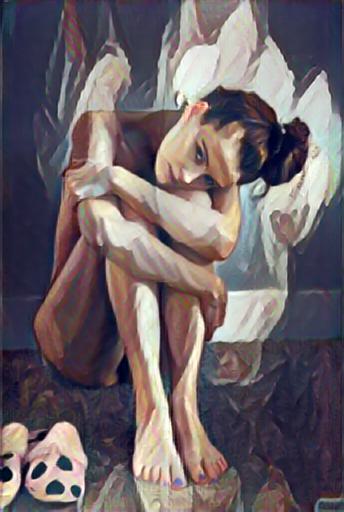
The third figure is performing, and knows it, and knows you know it. The pose comes straight from a popular culture playbook: the conservative nude, knees gathered, everything tucked, prettiness offered in the costume of modesty — the oldest gesture in the genre wearing this decade's clothes. Every element runs the script. Except the eyes. They come over the forearm, straight into the lens — and the script says they shouldn't. Performed modesty averts its gaze; that is the whole trick of it, from the Venus Pudica to last night's photo roll. Hers doesn't. The look breaks the fourth wall of her own pose. It says: we are both aware this is a performance, and I am the one giving it. Of the four, she is the Antwerp picture's closest cousin — decorum on the surface, and inside it, a joke with a very specific addressee.
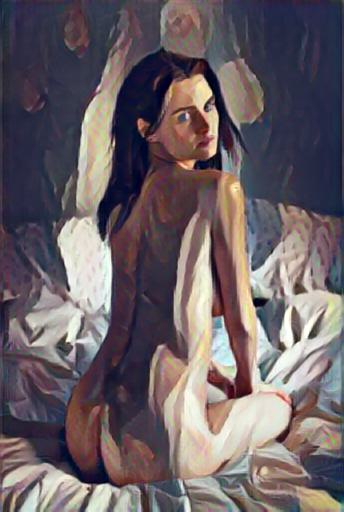
The last figure has all but left. Her back is to us — the full classical retreat, the pose our earlier essay was built on — and then, at the top of the composition, the head turns and undoes it. She looks back over her shoulder, and the face gives no verdict at all. Not welcome, not rebuke, not curiosity; possibly appraisal, possibly regret, possibly nothing more than confirming you are still there. It is the one gaze of the four that will not resolve, however long you stand in front of it. Her body concedes the argument of our first essay — the retreat, the refusal — while her eyes concede this one. She is the hinge between the two, and she refuses to say which side she is on.
As for the portrait that opened this page: Belgium bought her in 1926, six years after Modigliani's death, making Antwerp one of the first public museums anywhere to hang one of his nudes — a small act of nerve, given that the police had pulled his nudes from a gallery within living memory. The critics received her with a shrug that has aged into comedy: not his best work, one journal allowed, but better than no Modigliani at all. A century on she is a centerpiece of the reopened museum, and the verdict reads like the punchline to her own sideways glance — as though she heard it at the time and knew, before anyone else in the room, exactly how it would age.
He said he would paint her eyes when he knew her soul. Perhaps the truth runs the other way: some sitters look at you in a manner that leaves nothing to know — the soul arrives first, through the eyes, unasked. He didn't grant that nude her gaze. He surrendered to it. So did the museum that bought her when no one else would hang her.